Melt-and-Pour Gardener’s Soap with Walnut Shells

This article contains affiliate links. Please read our full disclosure page for details.
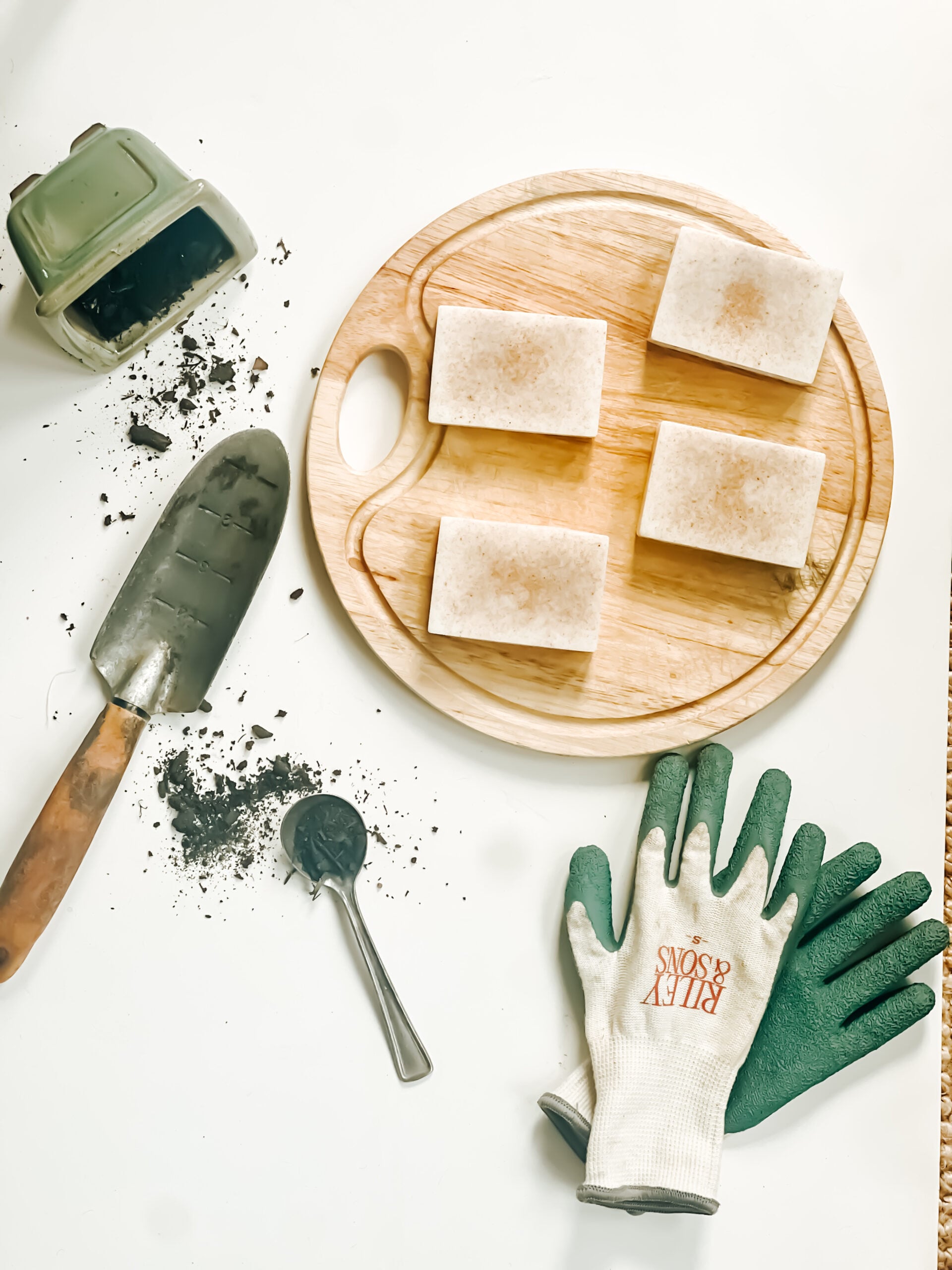
Gardener’s hand soap is a simple handmade gift for anyone who loves working in the garden. In this project, I’ll show you how to melt a pour-and-melt soap base, stir in finely crushed walnut shells for a little exfoliating texture, and pour the mixture into molds.
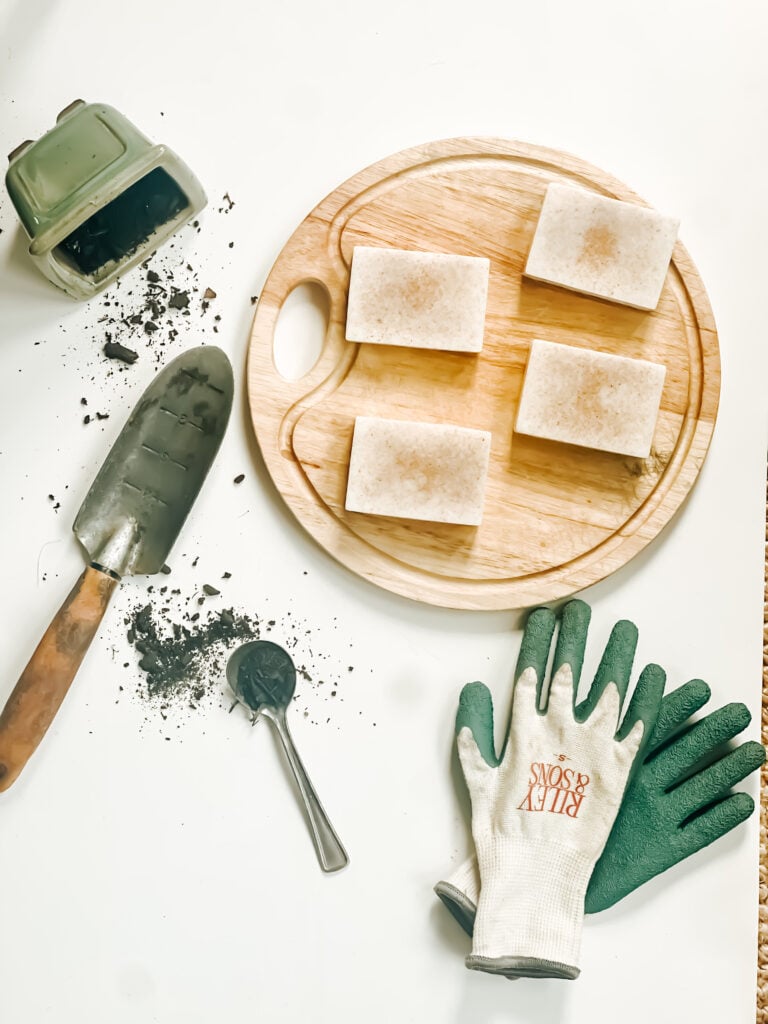
If you’ve never made melt-and-pour soap before, this is a simple project for learning the basics. You’ll melt a ready-made soap base, stir in finely crushed walnut shells, pour the mixture into a mold, and let it set.
Gardener’s hand soap makes a practical gift for someone who loves tending plants. The walnut shells add a little texture to the bar, making it a fitting choice for a garden sink or potting bench.
I like how this recipe turns a few simple materials into something useful and giftable. Once the bars have set, wrap them with a label and they’re ready to give.
What are walnut shells doing in gardener’s soap?
Finely ground walnut shell adds texture to this gardener’s hand soap. For this recipe, choose a cosmetic-grade walnut shell powder with a fine, consistent particle size; walnut shell products are available in different grades, from fine powders to coarser grits.
I’m using a suspension-style melt-and-pour soap base, which is designed to help keep particles like walnut shell distributed throughout the bar. The results can vary with the size and amount of the particles, so follow the base supplier’s directions and stir the mixture just before pouring it into the molds.
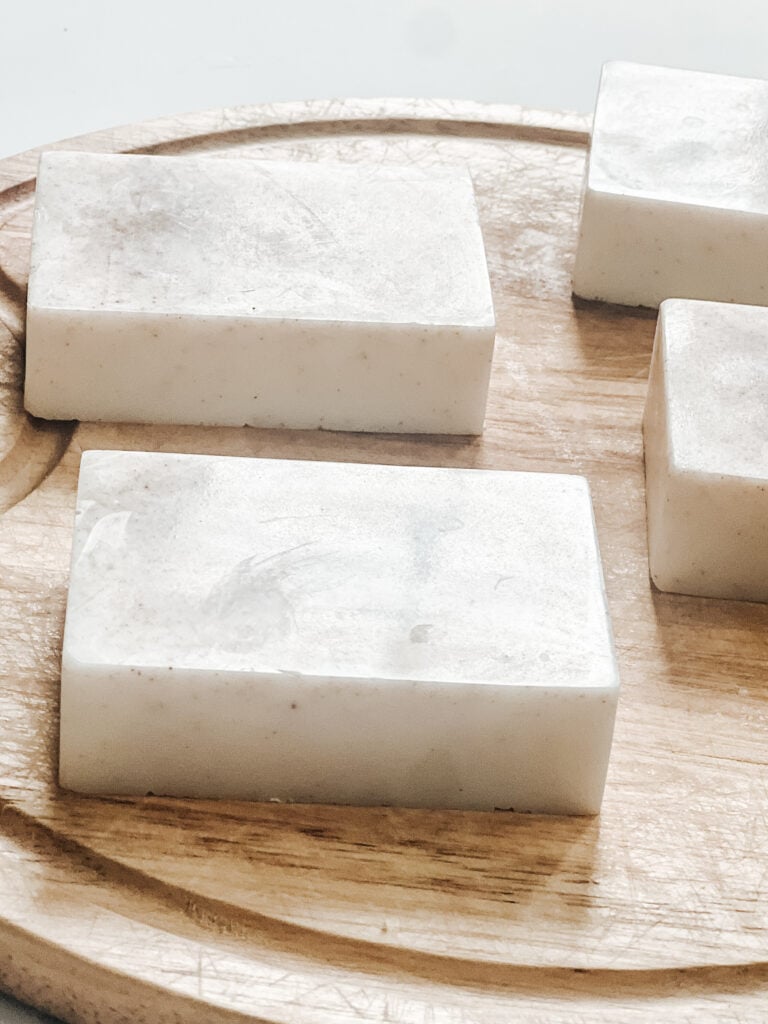
Why Make Gardener’s Hand Soap?
Melt-and-pour soap is made with a ready-to-use soap base. In this recipe, you melt the base, stir in finely ground walnut shells, and pour the mixture into a mold to set.
It’s a straightforward way to make a useful handmade gift, especially for someone who loves gardening. You can focus on choosing the soap base, adding texture, and creating a simple label without making soap from scratch.
The walnut shells give the bar its textured feel. I use a fine, cosmetic-grade powder for this recipe, since walnut shell products come in different particle sizes.
Make a Gardener’s Soap With Walnuts
What You’ll Need
Melt-and-Pour Soap Base, Suspension Type:
Choose a suspension-style base formulated to help keep particles distributed throughout the bar as it sets. How well the walnut shell stays suspended can depend on its particle size and amount.
Finely Ground, Cosmetic-Grade Walnut Shell Powder:
Walnut shell powder adds a textured feel to the soap. Choose a fine, cosmetic-grade product intended for personal-care formulations; walnut shell is available in different particle sizes.
Optional: Soap-Safe Fragrance:
If you’d like a scented bar, use a fragrance or essential oil suitable for soap making and follow the supplier’s recommended usage rate. The soap can also be left unscented.
Equipment & Ingredients Needed
Tools you’ll need to make gardener’s hand soap
This list contains affiliate links
Just a few ingredients
Step-by-Step Instructions to Make Melt & Pour Gardener’s Soap
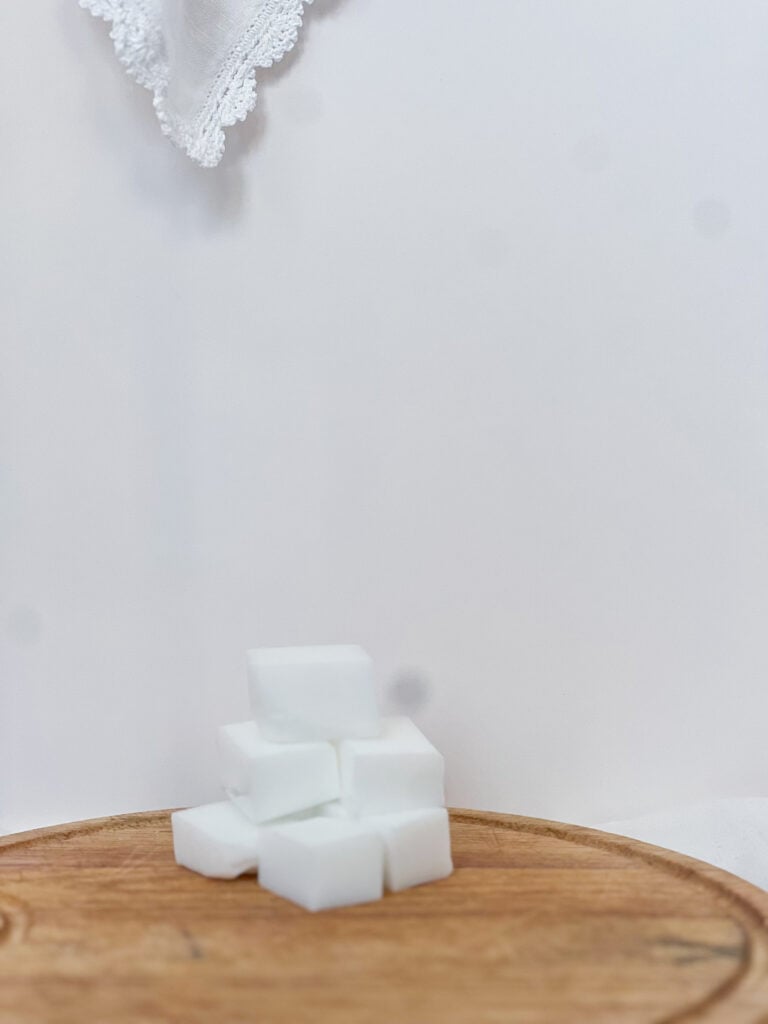
- Set the soap mold on a level, heat-safe surface. Cut the soap base into small, even cubes. Have the almond oil, fragrance oil, walnut shell powder, spatula, and alcohol spray ready.d heat on low-medium heat for 3-5 hours.
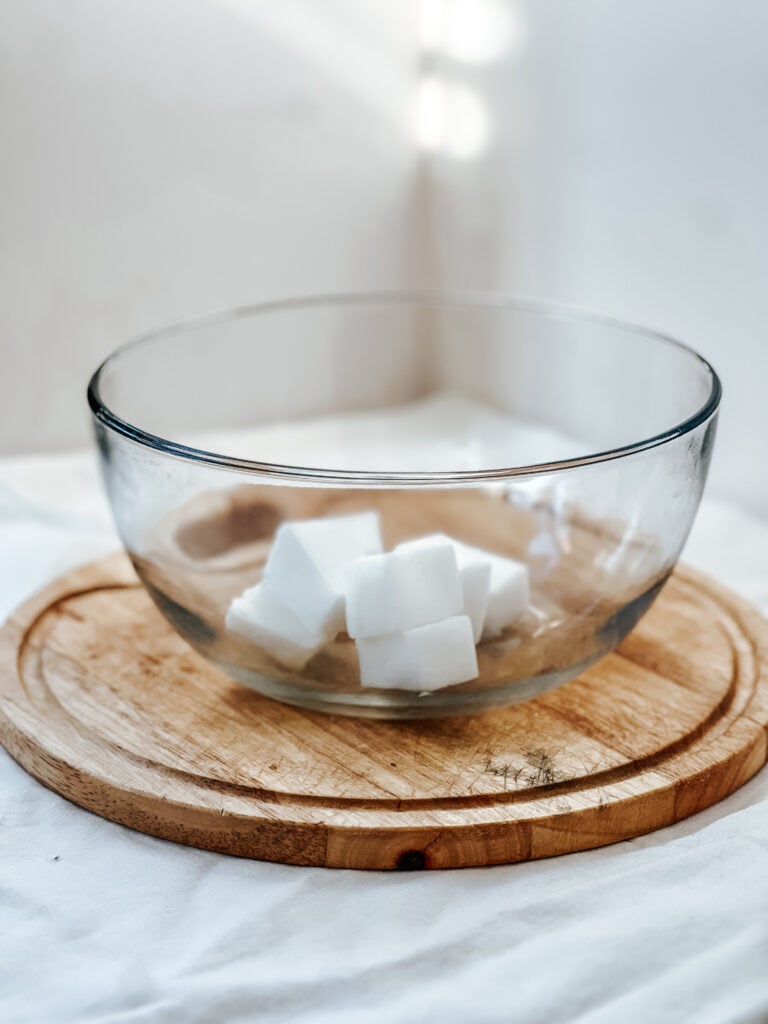
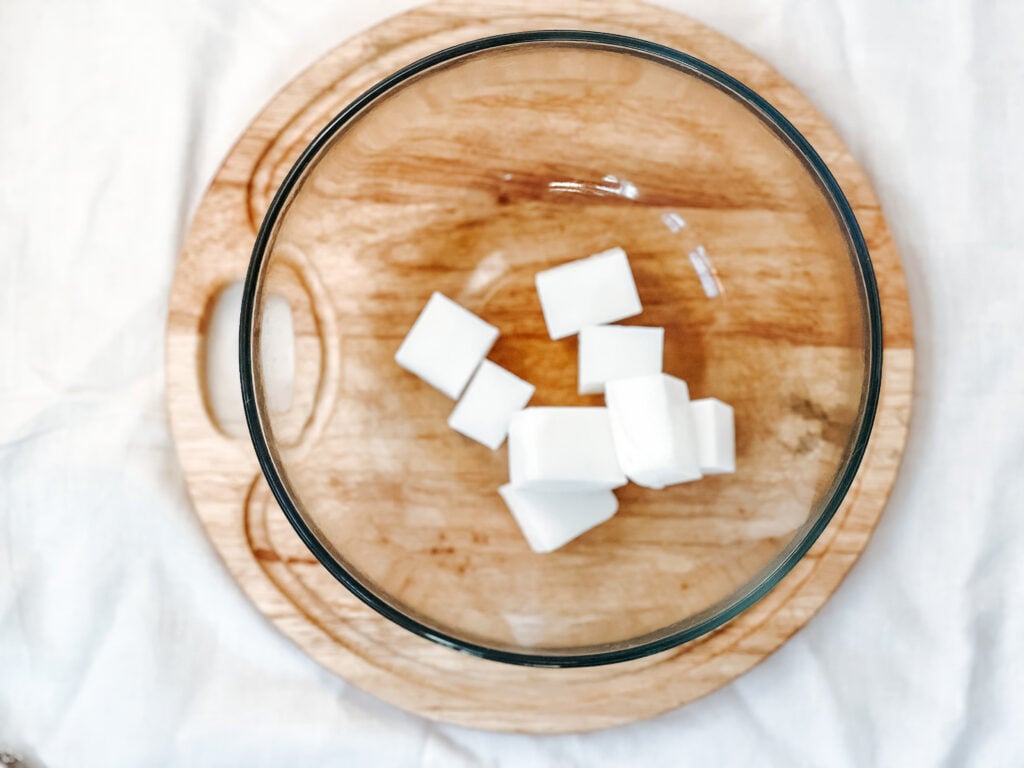
2. Place the cubes in a microwave-safe container. Microwave in short bursts, stirring between each, until the base is fully melted. You can also melt it gently in a double boiler. Avoid boiling or overheating the soap.
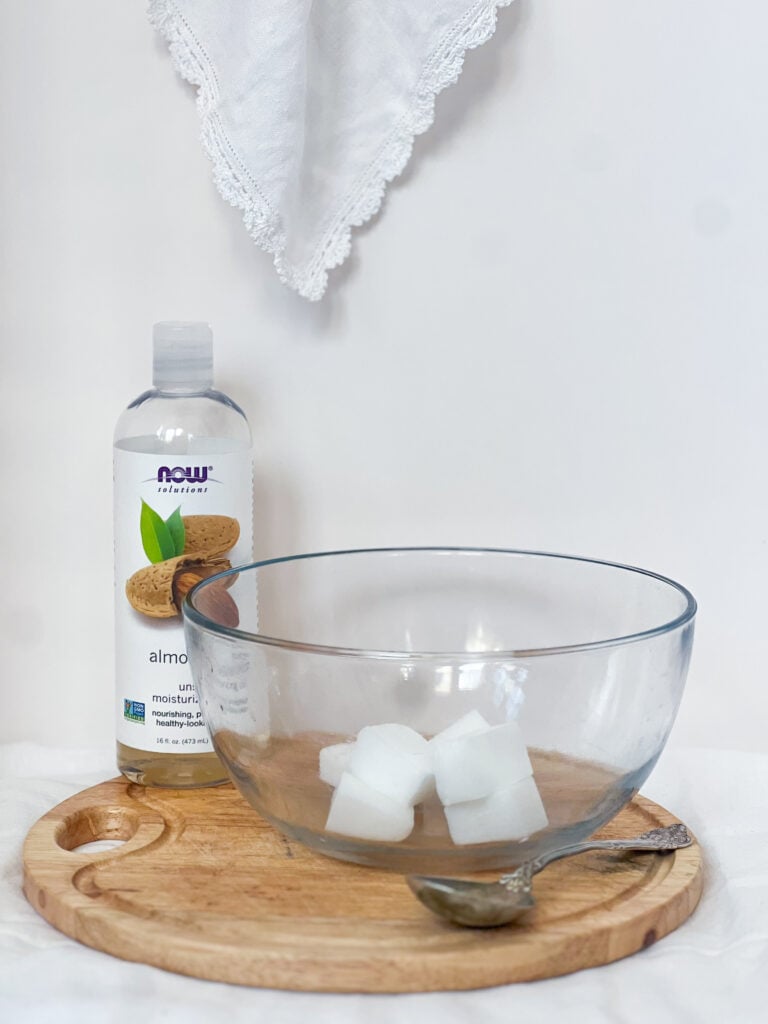
3. Let the melted base cool slightly, then stir in the almond oil and fragrance oil until evenly combined. Check the fragrance supplier’s recommended usage rate for rinse-off soap before using it.
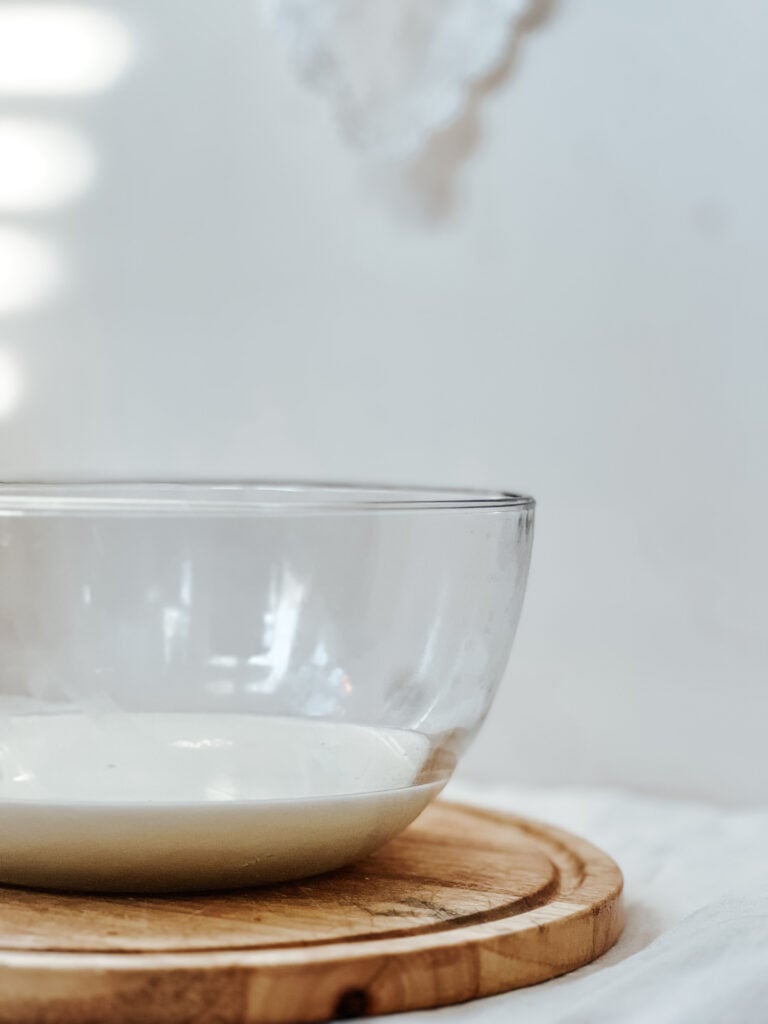
4. Let the soap cool, stirring occasionally, until it thickens slightly but is still easy to pour. About 120–125°F can be a useful guide, but follow the directions for your specific soap base.
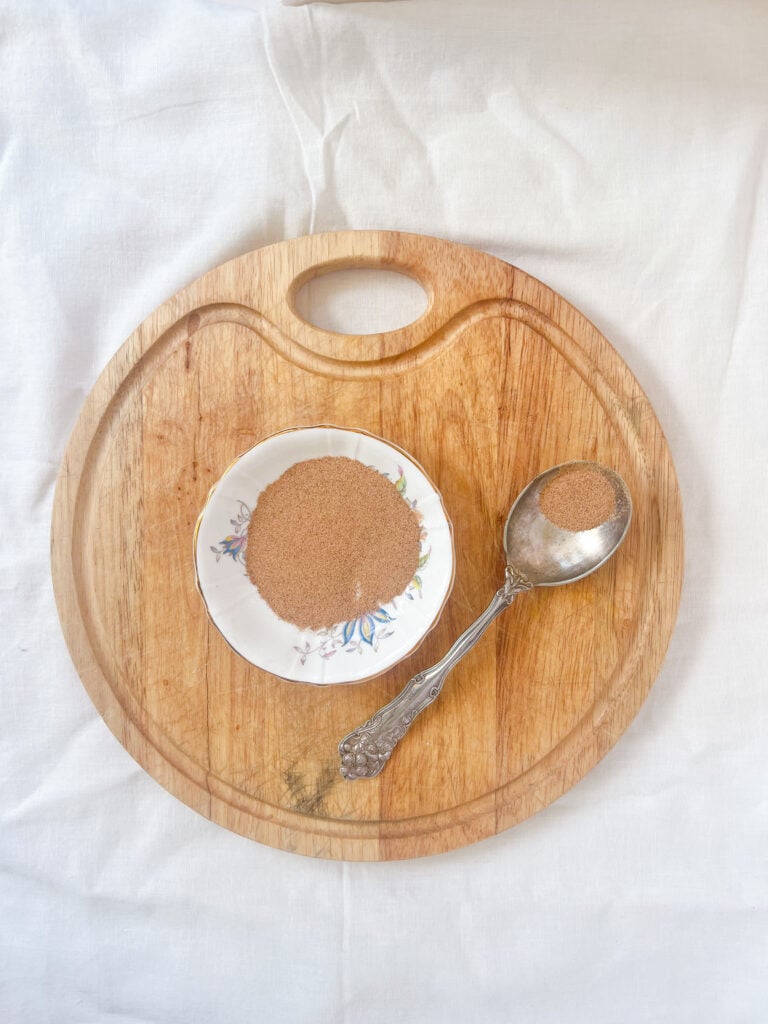
5. Wearing a mask and safety glasses to avoid breathing in the fine powder, sprinkle the walnut shell powder into the soap and stir well. Pour the mixture into the mold soon after mixing. If you’re filling several cavities, stir between pours so the powder stays distributed.
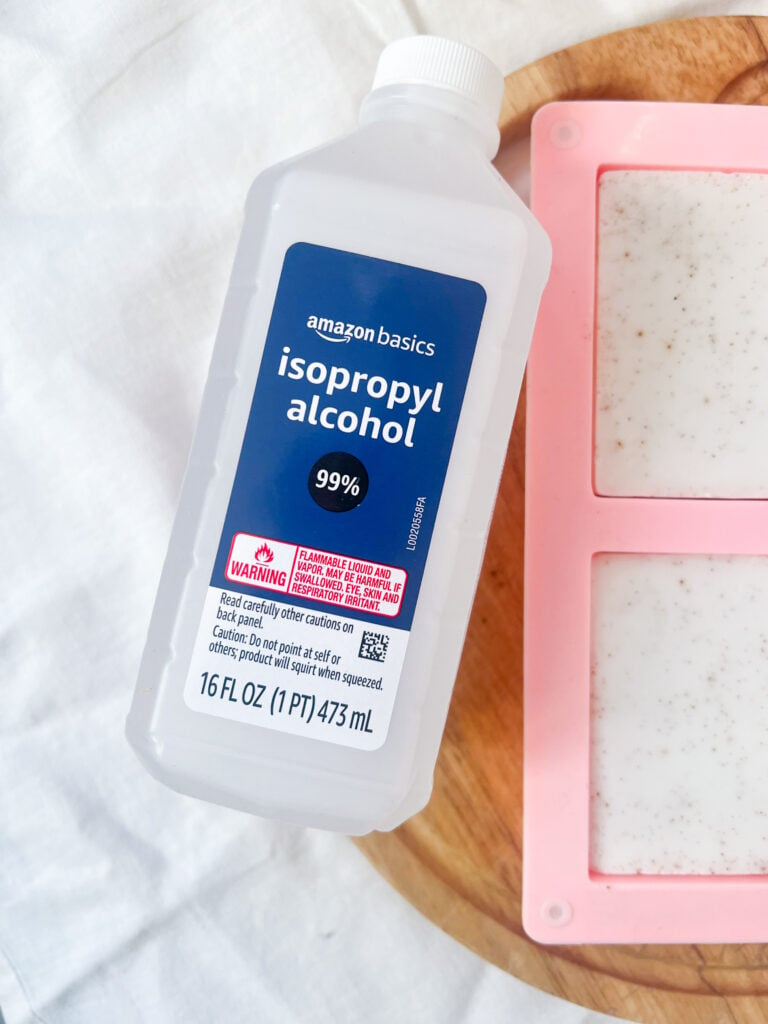
6. Lightly spritz the tops of the poured soap with 99% isopropyl alcohol.
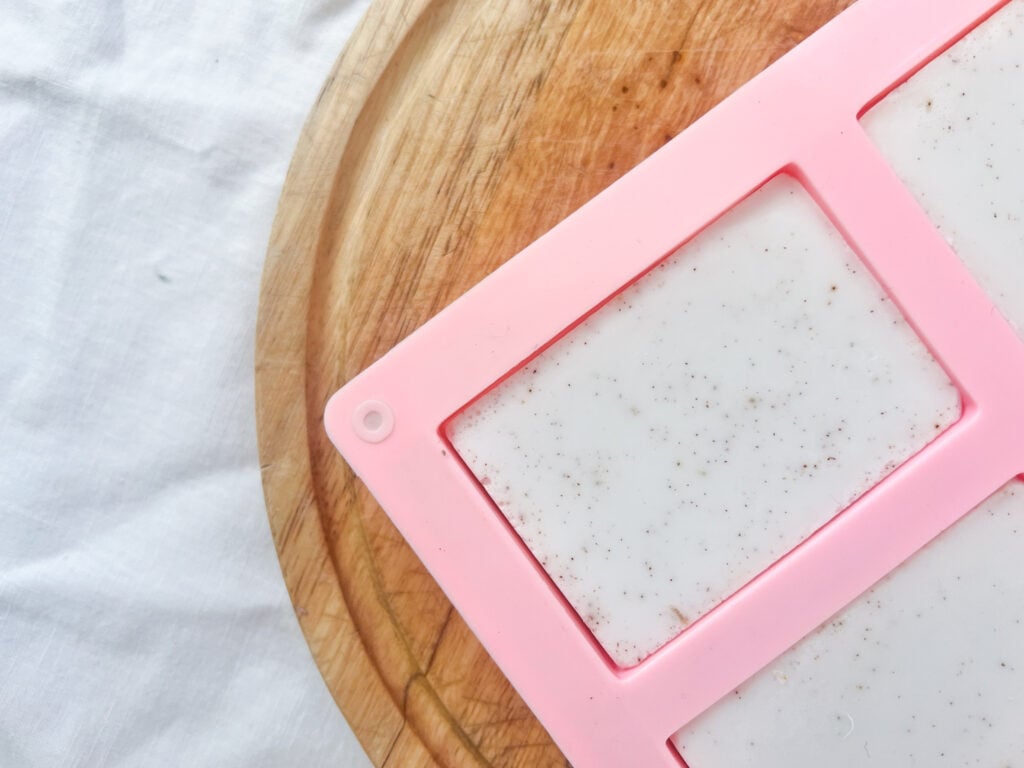
Leave the mold undisturbed until the soap is completely firm, several hours or overnight. Unmold the bars once they have hardened.
Once fully cool, wrap each bar to help protect it from moisture in the air.
How to Gift and Use
Your Gardener’s Hand Soap
This gardener’s hand soap makes a thoughtful gift for someone who loves time in the garden. Once the bars have fully set and cooled, wrap each one in clear soap wrap, then add a simple paper band or gift tag. Include the ingredients—especially the walnut shell powder, almond oil, and fragrance oil—so your recipient can check what’s in the soap.
To use, wet your hands, work the bar into a lather, gently rub your hands, and rinse. The walnut shell powder adds texture, so use light pressure and keep the bar away from your face and other delicate areas. Let it dry between uses on a draining soap dish.
How to Store Gardener’s Hand Soap
Once the bars are completely cool and firm, wrap each one tightly in plastic wrap or another airtight soap wrapper. Store the wrapped bars in a cool, dry place away from direct sunlight and heat.
When you’re using a bar, keep it on a draining soap dish so it can dry between uses.
The shelf life depends on the melt-and-pour base and fragrance oil you use. Check the suppliers’ packaging for their best-by or storage recommendations. Discard a bar if you notice an unusual odor, unexpected discoloration, or visible contamination. the freshness of the oil, the dryness of the plant material, and clean preparation and storage.
Gardeners Soap Melt and Pour Troubleshooting
FAQ’s
Why did the walnut shell powder sink to the bottom?
The soap may have been too warm and thin when you poured it. Let the mixture cool until it thickens slightly but is still pourable, then stir the walnut shell powder in just before pouring. Stir between mold cavities, too, so the particles stay distributed.
Why is the walnut shell powder clumpy?
Sprinkle it into the soap gradually and stir thoroughly. You can also mix the powder with the almond oil first to break up clumps before adding it to the melted soap.
Why does the soap feel too scratchy?
Walnut shell powder comes in different particle sizes. Use a finely ground, cosmetic-grade powder for a finer texture. If the bar still feels too abrasive, reduce the amount in your next batch.
Why is tWhy does my soap look wet or sticky after unmolding?here plant material in my salve?
This may be glycerin dew, which can form when melt-and-pour soap is exposed to moisture in the air. Once the bars are fully cool, wrap them tightly and store them in a cool, dry place.
Why is my soap soft or not lathering as much as I expected?
Extra oil can make melt-and-pour soap softer and reduce its lather. Measure the almond oil carefully, and avoid adding more than the recipe calls for.
Why is the fragrance weaker than I expected?
Adding fragrance while the soap base is very hot can weaken its scent. Let the base cool slightly before adding the fragrance, and follow the fragrance supplier’s usage guidance for soap.
Melt-and-Pour Gardener’s Hand Soap with Walnut Shells
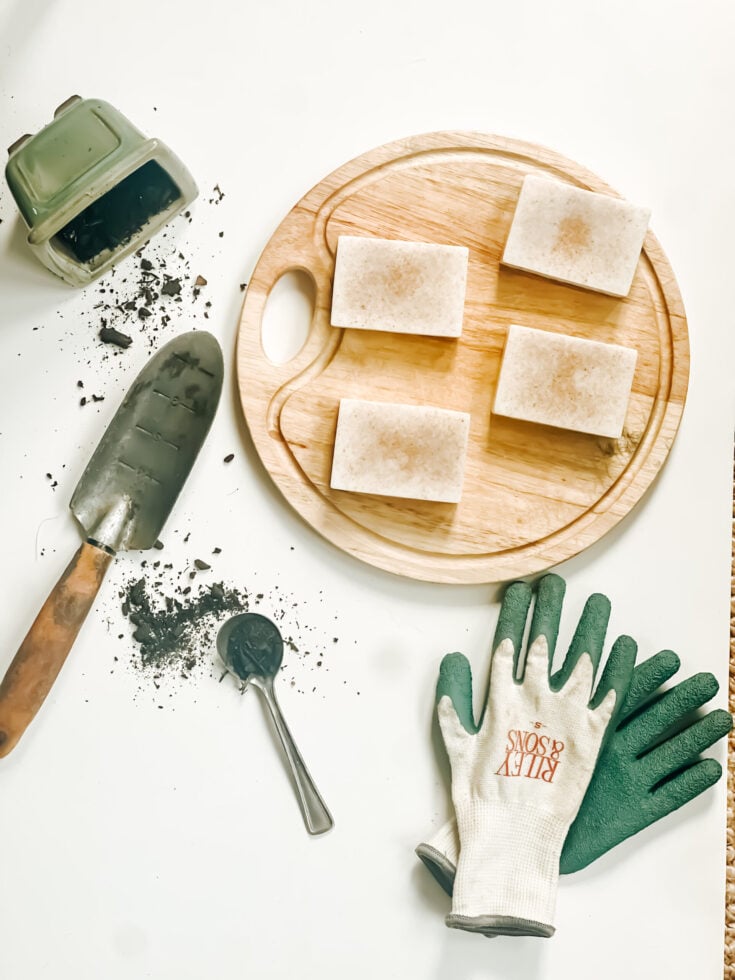
This easy melt-and-pour gardener’s hand soap combines a creamy goat milk soap base with finely ground walnut shells for a textured bar. A little almond oil and Juniper Myrtle fragrance make it a thoughtful handmade gift for gardeners.
Materials
- 750 g goat milk melt-and-pour soap base
- 2½ teaspoons finely ground walnut shell powder
- 5 ml almond oil, or another oil of your choice
- 2 ml Juniper Myrtle fragrance oil, or another soap-safe fragrance oil
Tools
- Digital scale
- Knife and cutting board
- Microwave-safe measuring cup or heat-safe pouring pitcher
- Microwave or double boiler
- Silicone spatula
- Measuring spoons
- Small bowl for mixing the walnut shell powder and almond oil
- Soap mold
- Spray bottle filled with 99% isopropyl alcohol
- Mask and safety glasses for handling the walnut shell powder
Instructions
- Prepare the mold. Set the soap mold on a level surface. Cut the soap base into small, even cubes.
- Melt the soap base. Place the cubes in a microwave-safe container and heat in short bursts, stirring between each, until fully melted. Alternatively, melt the base gently in a double boiler. Do not let it boil or overheat.
- Mix the walnut shell powder. In a small bowl, stir the walnut shell powder into the almond oil to make a smooth mixture.
- Add the fragrance. Let the melted soap base cool slightly, then stir in the fragrance oil.
- Cool the soap before adding the walnut mixture. Stir the base occasionally as it cools. When it has thickened slightly but is still pourable, stir in the walnut shell and almond oil mixture.
- Pour the soap. Stir well and pour the mixture into the mold soon after adding the walnut shell powder. If filling multiple cavities, stir between pours to help keep the powder distributed.
- Spray away bubbles. Lightly mist the surface of the soap with 99% isopropyl alcohol.
- Let the bars set. Leave the mold undisturbed until the soap is completely firm, several hours or overnight. Unmold the bars, then wrap them tightly once fully cool.
Notes
- A suspension-style melt-and-pour base is designed to help keep particles distributed in the bar. With other bases, some walnut shell powder may settle.
- Follow the fragrance oil supplier’s recommended usage rate for soap.
- Wrap the cooled bars tightly and store them in a cool, dry place.
Try Making More!
Love this project? Here are some ways to take it further.

Show Me What You Made!
I’d love to see your melt and pour gardener’s soap with walnuts! Post a photo to Instagram and tag @a.farm.to.keep or use #afkmakes so I can celebrate your creativity and see how your recipe turned out.
Happy making,
Julia
I am not a medical professional and do not claim that these herbs are a substitute for professional care. Always consult a professional for medical advice when starting natural remedies or using homemade natural products at home. These are just things that I use and love in my own home.
Pin it for Later!
Julia Linsteadt
Julia Linsteadt is a botanical maker and craft developer who made her first botanical craft, a calendula lip balm, with her mom at age 16, before spending six years running her own nature-based arts and literacy subscription box for families and writing for outlets like Willow and Sage Magazine. She creates botanical bath and body recipes rooted in the seasons, believing that crafting with your hands, and what the earth provides, is a direct path to feeling empowered, capable, and beautiful.