Why I Believe Paying Attention to the Seasons is a Radical Act

On slowing down, paying attention, and the quiet rebellion of living seasonally.
Over the weekend, I had a conversation with a friend who stated, “I am in my boundary-building season.” She was referring to her need to process the world around her through a new protective lens and to construct boundaries accordingly. This included not reading the news first thing in the morning, not answering every call or text the moment it came in, and recognizing when she was stepping in to solve an issue that didn’t initially involve her. Our conversation struck a chord in me, and it’s one I have been mulling over ever since. What does it mean to live with the seasons, both the natural ones and the deeply personal ones? And why does choosing to do so feel, in this particular moment in history, like such a radical act?
In a world that profits from your distraction and disconnection, simply choosing to notice is an act of quiet resistance.
Julia Linsteadt
We live in a world that measures worth by output. Productivity is the currency, efficiency is the virtue, and if you are organized one hundred percent of the time, you are told you are winning. But this relentless striving has a cost we rarely name out loud. In our rush to optimize every hour, we lose the ability to simply be. To simply exist as a human. We don’t pause long enough to take in the beauty of a moment, or to savor a job well done. We are always already moving on to the next thing.
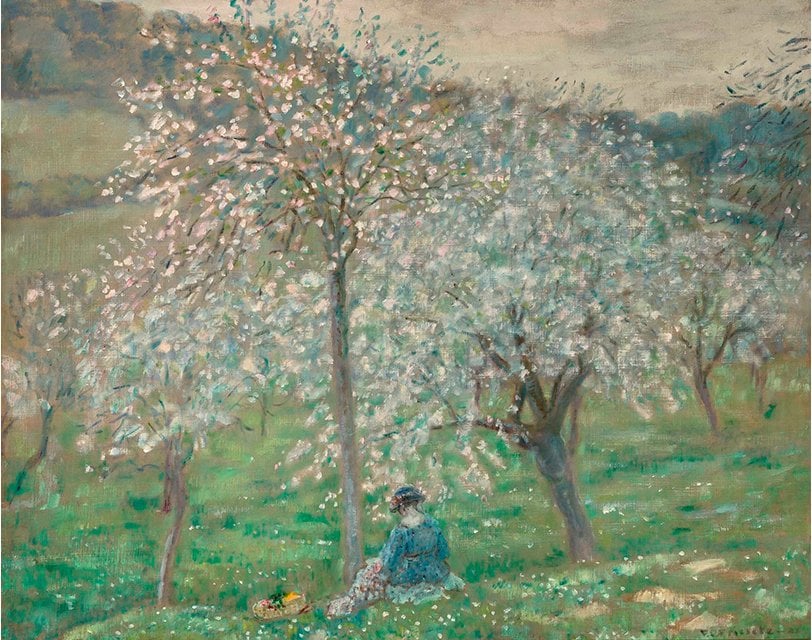
Framing daily life within the rhythm of the seasons offers something quietly revolutionary, a natural pacing that asks us to move differently at different times of year. The shorter days of autumn and winter invite rest, reflection, and dreaming. The long, luminous days of spring and summer provide the energy and light to bring those dreams into tangible reality. Following the ebb and flow of the seasons reconnects us to the natural world and, perhaps just as importantly, to one another.
Attention is the beginning of devotion.
Mary Oliver
Mary Oliver wrote in Upstream, “Attention is the beginning of devotion.”It is a line I return to often. Noticing the subtle shifts happening around you, the angle of the light changing in late February, the first green sprout pushing through cold ground, heightens awareness and builds a quiet, sustaining connection between yourself and the living world. Paying attention to these shifts and allowing them to guide the rhythm of your days is a radical act. It is a conscious choice to step out of the relentless current of productivity and efficiency and let nature be the one who tells you when to push a little harder and when to rest a little longer.
Choosing to pay attention to the seasons is a countercultural act because it asks nothing of the economy and everything of your own presence. It cannot be monetized, optimized, or sold back to you. It is free, unglamorous, and available to everyone. In a world that profits from your distraction and disconnection, simply choosing to notice is an act of quiet resistance.
Is this a reasonable way to live in the modern world? Absolutely, and perhaps more urgently now than ever before. As the tools of production grow faster and more powerful, the question worth asking is not what we are gaining, but what we are leaving behind. The daffodil pushing its way through damp winter soil doesn’t consult a schedule. It simply knows its season. In watching it, we are reminded of something we already know but keep forgetting, that we, too, are capable of that same quiet perseverance and resilience.
Paying attention doesn’t require a dramatic life overhaul. It looks like noticing the angle of the light shifting from winter to spring. It looks like choosing to cook with what is in season, or growing one herb on a windowsill and watching it lean toward the sun. It looks like marking the solstice or the equinox in even the smallest way, a candle lit, a walk taken, a moment of stillness. It looks like stepping outside in the morning before checking your phone. These are not grand gestures. They are quiet acts of devotion to the world that is already here, already turning, already offering itself to anyone willing to pay attention. Like my friend who is living in her boundary-building season, I will continue to live by the seasonal almanac as my guide for what to grow, cook, make, do, and connect, and I hope you will join me in this human dance with nature.
This essay was first published as part of Farm Notes Substack: A Farm to Keep is equal parts personal essay, seasonal almanac, and handcraft guide — a weekly gathering place for those who find beauty in the homegrown, the handmade, and the unhurried.
Let’s Be Friends!
If you gave this article your time, I would love to hear your thoughts. Please share in the comments below.
Don’t forget to pin this post and follow A Farm to Keep on Pinterest! You can save all your favorite recipes, projects, and slow living articles to your boards and stay up to date with the latest creations.
Share your creations on Instagram and tag us at @a.farm.to.keep
More Slow Living Conversations
What is the Difference Between Slow and Simple Living?