Make Mugwort Salve: An Easy Herbal Salve Recipe

This article contains affiliate links. Please read our full disclosure page for details.
Mugwort is one of those herbs that immediately feels at home in an herbal maker’s cabinet. In this project, I’ll show you how I infuse dried mugwort into olive oil and combine the finished oil with beeswax to make a simple, firm herbal salve.

If you’ve never made a salve before, this is a useful recipe for learning the basic process. Once you understand how infused oil and beeswax work together, you can use the same method with many other dried herbs.
I first encountered mugwort on a hike in Northern California. The height of the plant caught my eye, as did it’s robust herby aroma. After some research, I learned more about the historical use of mugwort and its ancient link to soothing soreness and muscle aches.
I first began making with mugwort out of curiosity. After infusing the dried foraged herbs in oil, I noticed how easily mugwort’s aroma transferred to the oil. I now think of this recipe as my go-to for a simple, yet naturally potently scented salve.
What is Mugwort?
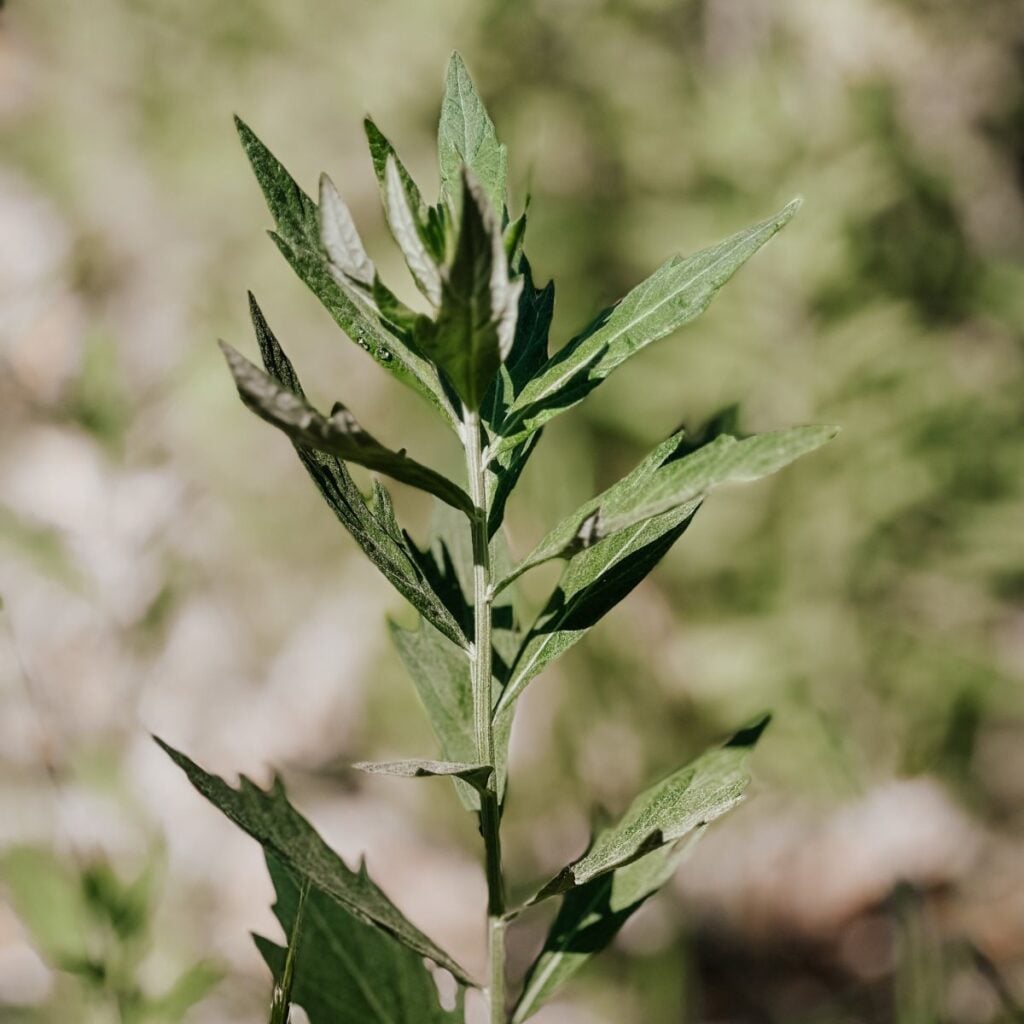
Mugwort is a common name used for several aromatic plants in the Artemisia genus. The mugwort growing in much of California is often California mugwort, Artemisia douglasiana, a native perennial with green upper leaf surfaces and silvery undersides. It commonly grows in colonies, spreading through underground rhizomes, particularly in areas with some moisture. Calscape provides photographs and regional information about California mugwort.
Because multiple plants are called mugwort, identifying the particular species is important before harvesting or using it.
Mugwort was one of the first wild herbs I learned to recognize. Its upright stalks, plentiful leaves, clustered growth, and distinctive scent helped me become familiar with it. That familiarity developed over time and through repeated observation, not through relying on a single identifying characteristic.
When harvesting any wild plant, take only a small amount from a healthy, abundant stand. Avoid roadsides, sprayed areas, polluted waterways, private property, and protected land.

Why Make Mugwort Salve?
A salve is a semi-solid preparation made by combining an oil with wax. In this recipe, the olive oil carries the color and aroma of the mugwort, while beeswax transforms the liquid oil into a portable balm.
Salves are one of my favorite ways to use an infused oil because the process is quick and requires very few ingredients. Once you understand the basic relationship between oil and wax, you can adapt the method to many different botanical oils.
The mugwort’s scent transferred readily into my oil. The finished salve retained that natural aroma, so I didn’t feel the need to add highly concentrated essential oils.
Make a Mugwort-Infused Oil Salve with Beeswax
What You’ll Need
Dried Mugwort:
Dried mugwort is the heart of this salve — floral, calming, and gently therapeutic. It has long been used to ease stress, soothe the nervous system, and promote a sense of quiet calm, making it the perfect herb to infuse into a salve meant for moments of overwhelm.
Olive Oil:
I use olive oil because it is easy to find, slow to absorb, and produces the texture I prefer in an everyday salve.
Cosmetic-grade beeswax (adjust for desired firmness):
Beeswax gives the salve its firm texture and creates a protective layer on the skin.
Optional: Vitamin E:
Vitamin E can help slow oxidation in oil-based preparations, but it is not a preservative and will not prevent microbial growth caused by water or damp plant material.
Optional: Essential Oil of Choice:
A few drops of essential oil (lavender or clary sage for relaxation)
Ingredients & Equipment Needed
Just a few ingredients
Tools you’ll need to make herbal mugwort salve
This list contains affiliate links
Step-by-Step Instructions to Make Herbal Mugwort Salve
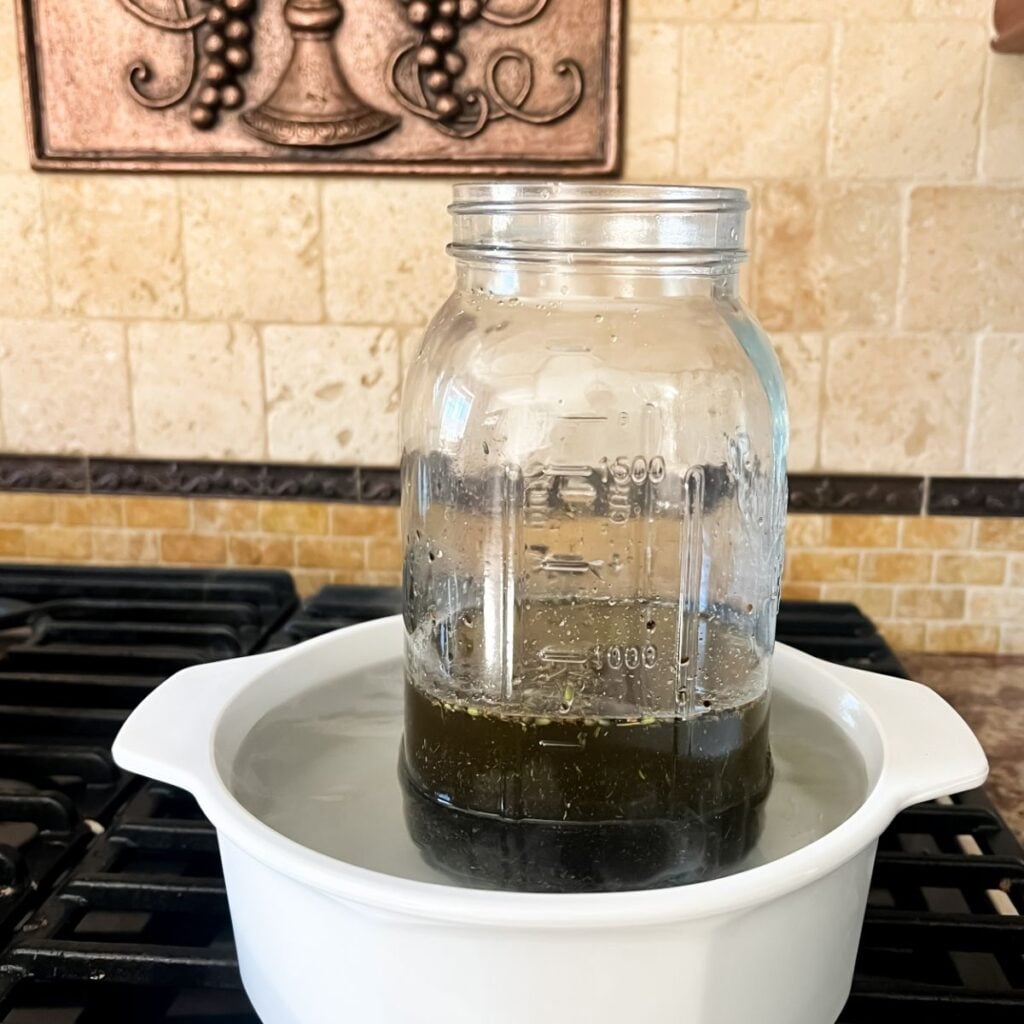
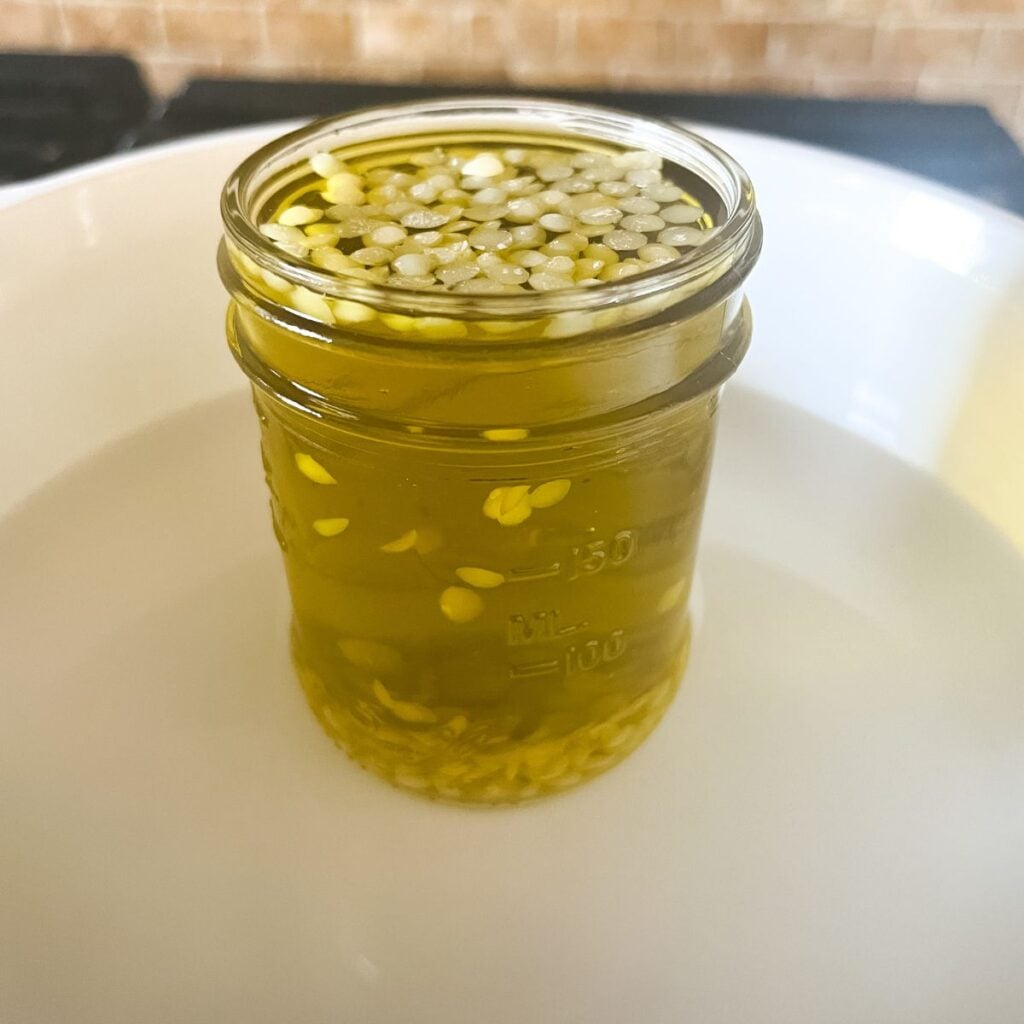
- Place the 2 cups of dried mugwort herbs in a heat-proof glass jar and cover them with the one cup of olive oil. Place the oil-covered herbs in a double boiler or fill a medium saucepan halfway with water. Place the heat-proof jar in the center of the pan and heat on low-medium heat for 3-5 hours.
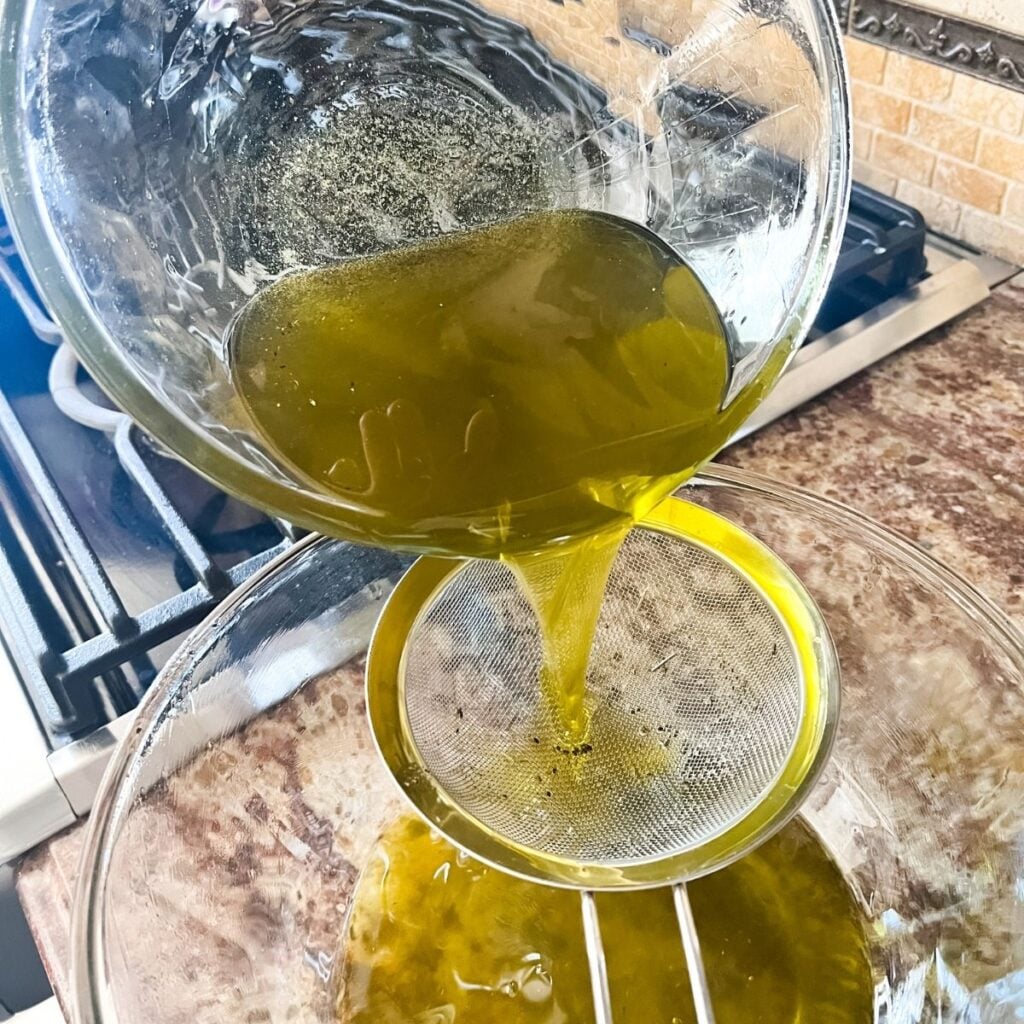
2. Cover a fine mesh strainer with cheesecloth, strain the herbs from the infused oil, and set aside. Strain 2-3 times to remove all the remaining debris from the oil. I usually strain my oils three times because I dislike tiny pieces of herbs floating in the finished salve.
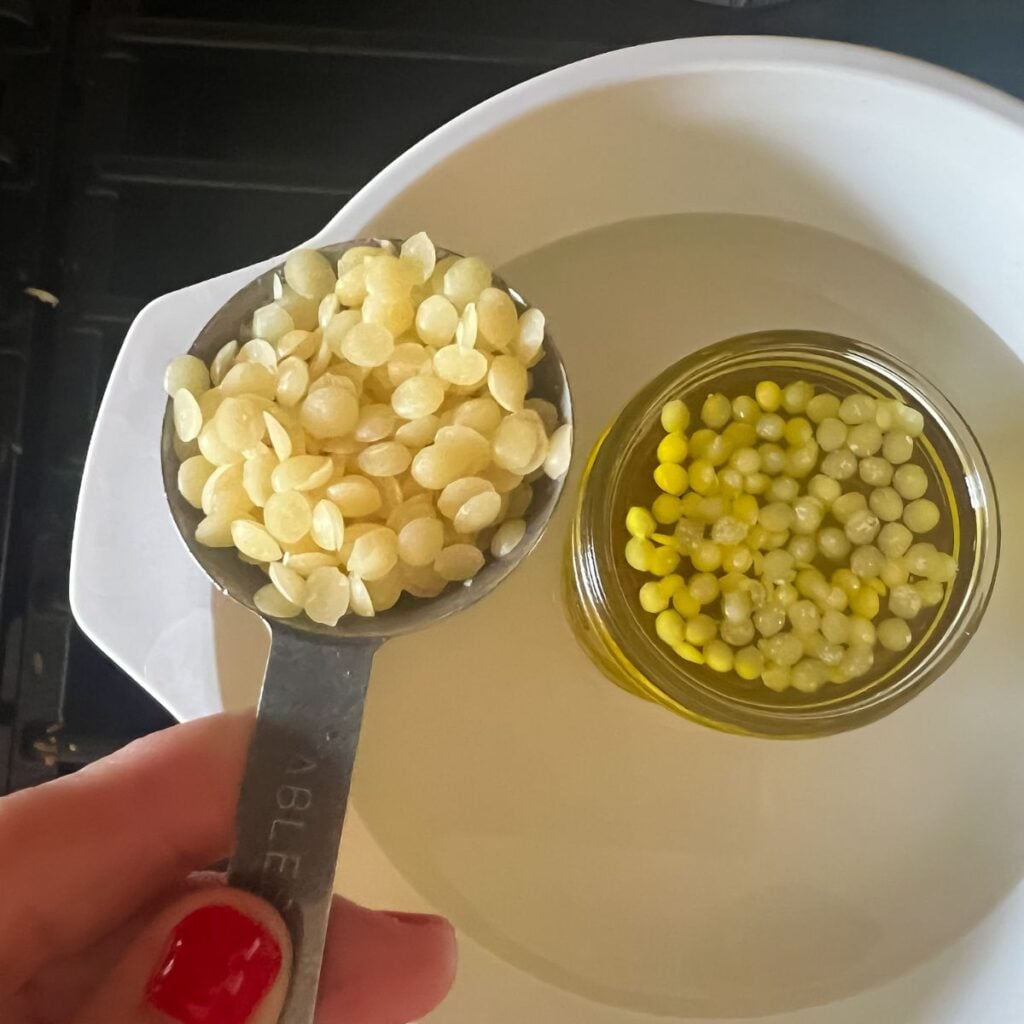
3. Melt the Beeswax: Pour one cup of your strained mugwort-infused oil and start with 2 oz of cosmetic-grade beeswax together in a double boiler or heat-safe bowl set over a pot of gently simmering water. Heat on low, stirring regularly, until the beeswax has fully melted and combined with the oil into a smooth, even mixture. Add more beeswax pellets as needed to reach your desired firmness.
4. (optional) Add Essential Oil & Vitamin E: Once the mixture has melted and is fully combined, remove it from the heat. If you are using essential oil, add a 10-15 drops now and stir gently to incorporate. Add up to 5 drops of vitamin E if using for additional skin-softening benefits. This is the moment to work quickly, as the mixture will begin to set as it cools.
Note: I always test a spoonful of the salve in the freezer before pouring the whole batch into tins. It only takes a minute and lets me adjust the texture if I want it a little softer or firmer.
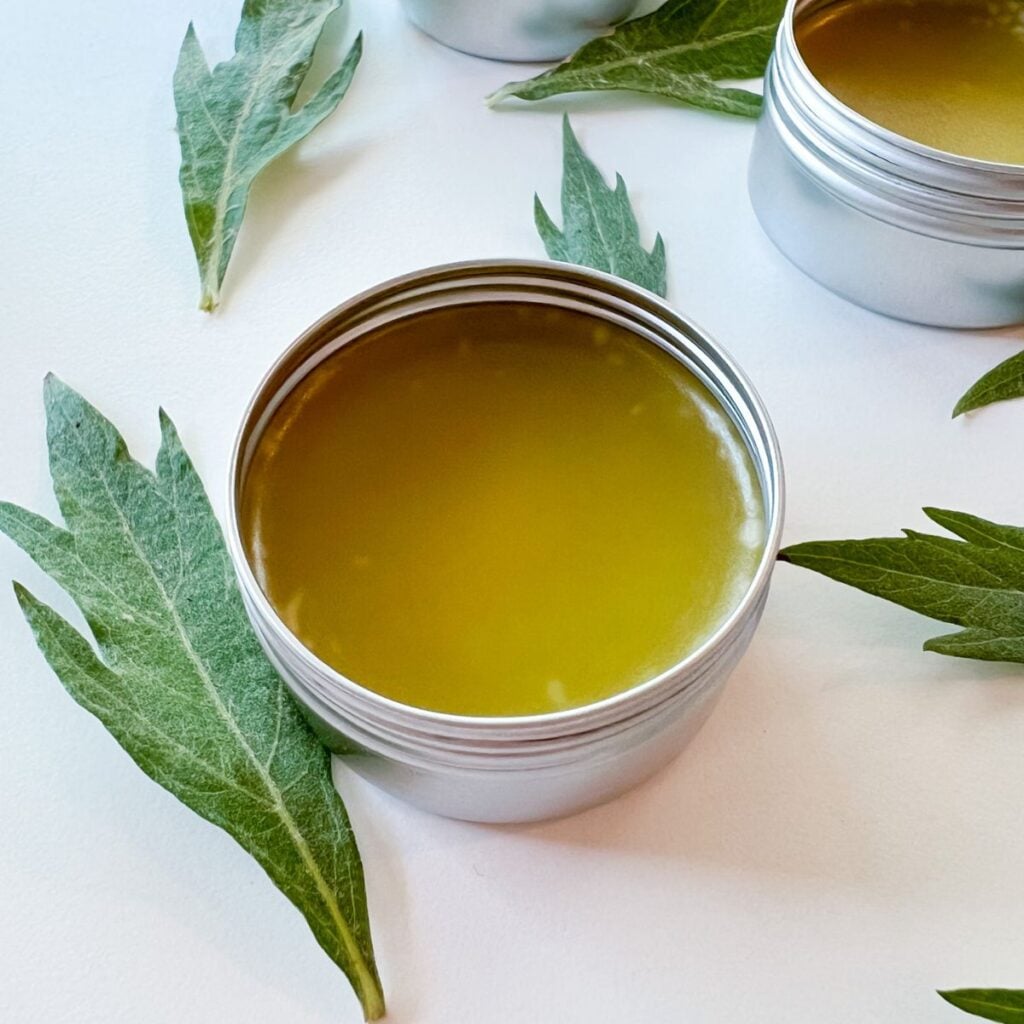
5. Pour and Set: Carefully pour the warm salve mixture into your tins or glass jars. Work slowly and steadily to avoid spills. Once poured, leave the containers undisturbed at room temperature to cool and solidify. While the salve may appear solid within an hour, allow it to cure for a full 24 hours to ensure it has completely set before sealing and storing.
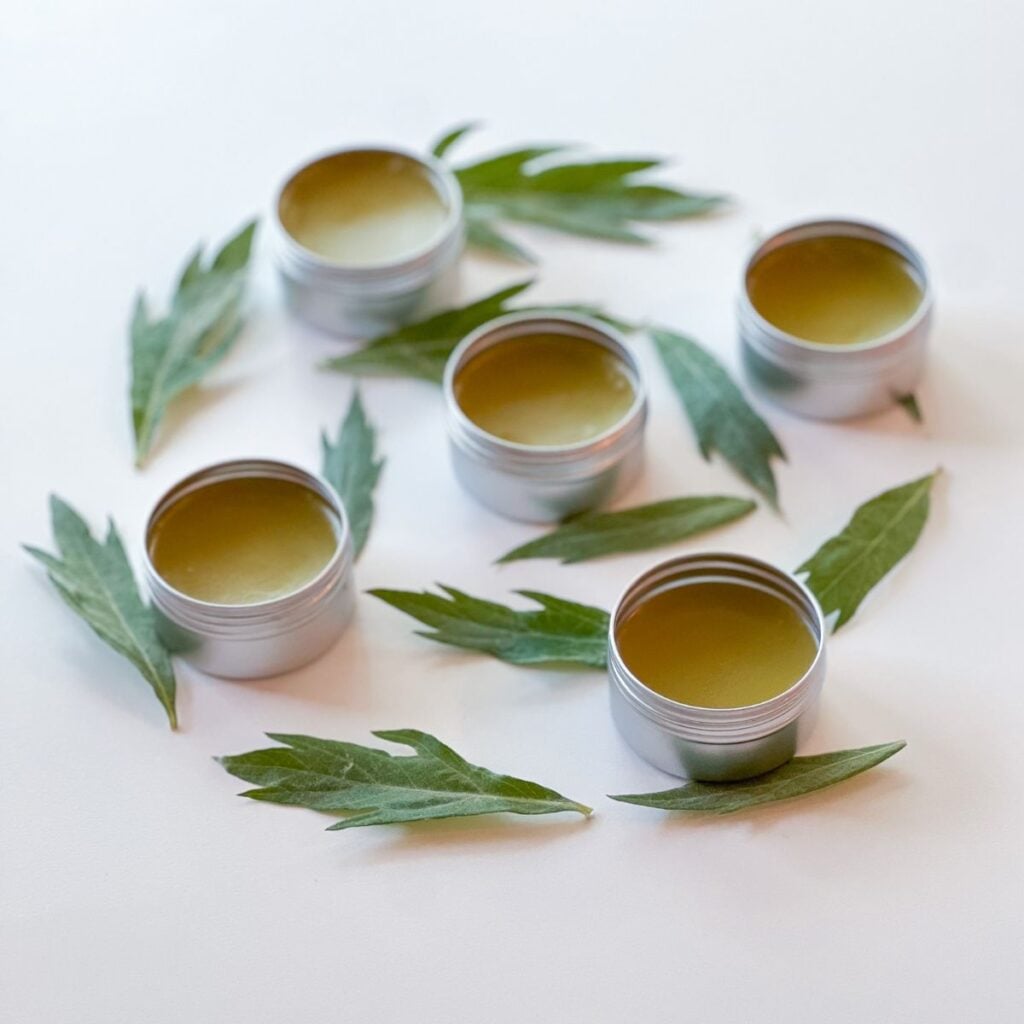
6. Store and Enjoy: Once fully set, seal your tins or jars and store them in a cool, dry place. Your mugwort salve is now ready to use. Smooth it onto dry skin as a soothing, nourishing balm.
How to Use Your Mugwort Salve
I like to carry a tin of mugwort salve with me while hiking. I use it externally as part of my skin-care routine after bug bites and massage it onto tired areas after a long day on the trail.
Its firm consistency makes it especially convenient for travel. The salve stays solid in its tin but softens when warmed between the fingers.
This is my personal use rather than a claim that mugwort salve treats a medical condition. Evidence supporting mugwort for health purposes is limited, according to the National Center for Complementary and Integrative Health.
Patch-test the salve on a small area before broader use. Do not apply it to broken skin, and stop using it if irritation occurs. People with plant or pollen allergies should be particularly cautious.
How to Store and the Shelf Life of Herbal Mugwort Salve
eep the salve tightly covered in a cool, dry place away from direct sunlight, excess heat, and moisture.
Use clean, dry hands or a small applicator when removing salve from the tin. Discard it if you notice:
- A stale or crayon-like odor
- Mold or unexpected discoloration
- Moisture inside the container
- A significant change in texture or scent
Because this recipe contains no water, it does not require a conventional broad-spectrum preservative. However, its shelf life still depends on the freshness of the oil, the dryness of the plant material, and clean preparation and storage.
Mugwort Salve Troubleshooting

FAQ’s
Why is my salve too hard?
The recipe contains more wax than you prefer, or some of the oil may have been lost during measuring or heating. Remelt the salve gently and add infused oil a small amount at a time. Test it on a chilled spoon before re-pouring it.
Why is my salve too soft?
The oil-to-wax ratio may be too low for the texture you want, or the surrounding room may be warm. Remelt the salve and add a small amount of beeswax. Stir until it is completely incorporated, then test again.
Why does my salve feel grainy?
Graininess can occur when wax or other solid ingredients cool unevenly. Remelt the entire batch gently, mix it thoroughly, and pour it again.
Why is there plant material in my salve?
The infused oil probably needed finer or repeated straining. Remelt the salve and strain it through clean muslin while it is still liquid.
How can I tell whether the oil has gone rancid?
Rancid oil often develops a stale, waxy, putty-like, or crayon-like odor. When in doubt, discard it and begin with fresh oil.
Try Making More!
Love this project? Here are some ways to take it further.
More Posts About Salves
Show Me What You Made!
I’d love to see your mugwort salve! Post a photo to Instagram and tag @a.farm.to.keep or use #afkmakes so I can celebrate your creativity and see how your recipe turned out.
Mugwort was one of the first wild herbs I learned to identify, and every time I make this salve I’m reminded how satisfying it is to transform a common plant into something useful with only a few simple ingredients. I hope this recipe gives you the confidence to make your own, and then experiment with calendula, lavender, rosemary, and other herbs as your botanical cabinet grows.
Happy making,
Julia
$5.00
Make Mugwort Salve An Easy DIY Botanical Recipe Printable PDF
Purchase this recipe booklet in PDF format! The PDF file contains everything you need to make a simple, beautiful mugwort salve from scratch. Including a full ingredients list, equipment guide, step by step instructions, and notes on the art of botanical crafting.
Download the file immediately and keep your confirmation email so you can download it again later.
I am not a medical professional and do not claim that these herbs are a substitute for professional care. Always consult a professional for medical advice when starting natural remedies or using homemade natural products at home. These are just things that I use and love in my own home.
Pin it for Later!

Julia Linsteadt
Julia Linsteadt is a botanical maker and craft developer who made her first botanical craft, a calendula lip balm, with her mom at age 16, before spending six years running her own nature-based arts and literacy subscription box for families and writing for outlets like Willow and Sage Magazine. She creates botanical bath and body recipes rooted in the seasons, believing that crafting with your hands, and what the earth provides, is a direct path to feeling empowered, capable, and beautiful.